
Conference History
Many educators from around_ Germany, Greece, Romania, UAE, South Africa, UK, Canada, Indonesia, Georgia, Qatar, Estonia and etc. _ the world participated in the conference. The participants got the chance to participate in fruitful conversations and impart their knowledge and experience. The sessions featured talks addressing significant issues and ground-breaking solutions in the areas of learning, teaching, and education.
The conference was a great chance to share ideas, find inspiration, and get a deeper comprehension of the difficulties that educators confront as well as potential answers to those difficulties.
Highlighted Speakers
| Author | Article title | Affiliation | |
|---|---|---|---|
 | Prof. Dr. Jasmine Fernandez | Beyond Task Delegation: Reconceptualizing Instructional Design to Measure Competence in The Age of Generative AI | University of the People, India |
| Prof. Dr. Juan García-Rubio | Motivations Of Future Spanish Teachers in A Consecutive Initial Training Model | University OF Valencia, Spain |
 | Dr. Annuncy Vinoliya D | Bridging The Gap: A Need Analysis and Curriculum Design for Biolinguistics in Humanities and Social Sciences | National Institute of Technology, Rourkela, India |
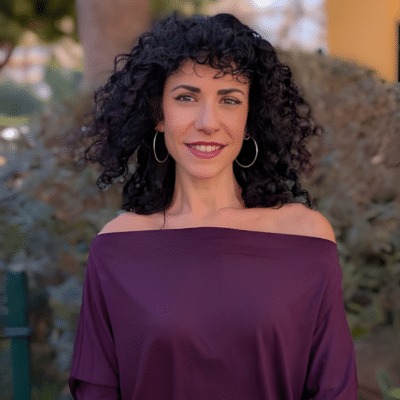 | Dr. Cristina del Pilar Gallego Fernández | Informal Pedagogy and Collaborative Learning of Jazz in Primary Education | Independent researcher and music educator, Spain |
| Dr. Denada Ibrushi | Coaching The Future: AI, Experiential Learning, And Ethics in Business Education | St. Mary’s university, the United States |
| Dr. Eitan Machter | Education For Creativity in The Age of Artificial Intelligence AI | Haifa University, Israel |
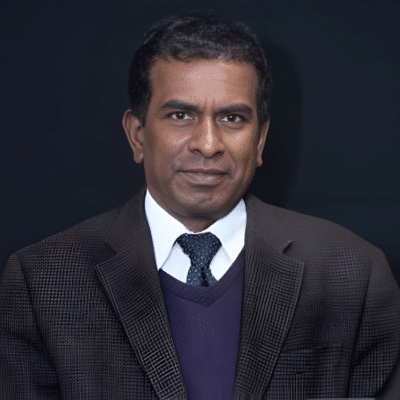 | Dr. Gnanaseharan Selliah | Empowering Parents as Active Partners in Children’s Learning. | Educational Consultant, the United States |
| Dr. Hsuehi Lo | Supporting 3-5 Grade Students in Solving Story Problems in Math Lessons: A Comparison of Teachers and AI Responses | St. Cloud State University, the United States |
| Dr. Irem Cevik | The Effect of Explicit and Implicit Learning Addition and Multiplication Principles in Algebra by Students with Different Mathematical Metacognitions on Fluency and Mathematical Explanation | Ministry of National Education, Türkiye |
| Dr. Khadija Farhan Alhumaid | AI Assistant Usage in Student Life | Rabdan Academy, the United Arab Emirates |
 | Dr. Kyler Mahar | Qualitative Analysis of School Culture and Community Qualities Motivating and Satisfying Teachers | Blue Mountain Christian University, the United States |
| Dr. Michal Novocký | Professional Reflection – An Easy Way to Improve Educational Work of Teachers? | Pavol Jozef Šafárik University in Košice, Faculty of Arts, Department of Pedagogy, Slovakia |
| Dr. Omar Saleh Alobud | MOOC Design, Engagement, And Feedback: A Mixed Method Case Study from Learners with A Health Science Background in The Kingdom of Saudi Arabia | King Saud Bin Abdulaziz University For Health Sciences, Saudi Arabia |
| Dr. Qiancong Zhang | Postgraduate Tuition Policies in Transition: A Comparative Policy Analysis of China and Finland | University of Jyvaskyla, Finland |
 | Dr. William Jeynes | The Relationship Between Certain Key Components of Parental Involvement and Minority Student Academic Outcomes | California State University at Long Beach (and Witherspoon Institute at Princeton), the United States |
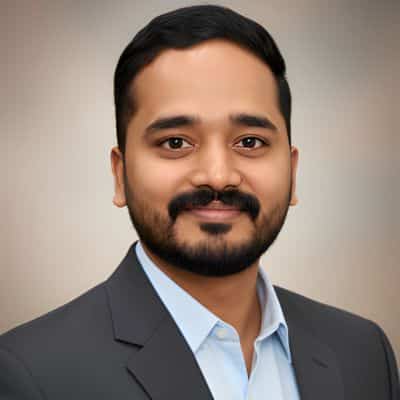 | Mr. A Sabu John | Integrating Reflective Pedagogy into Counsellor Education: Designing and Refining A 30-Hour Personal Development Programme | CHRIST (Deemed to be University), India |
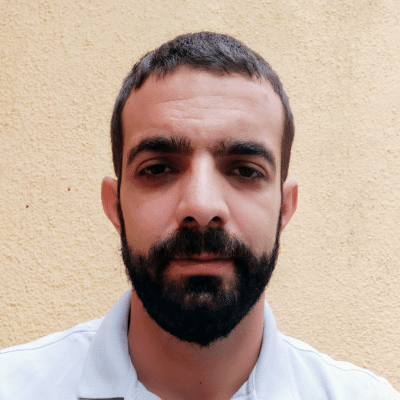 | Mr. Efthymios Spyridon Georgiou | Innovative Digital Teaching Approaches for Geographic Information Systems | Company Efthymios Georgiou, Greece |
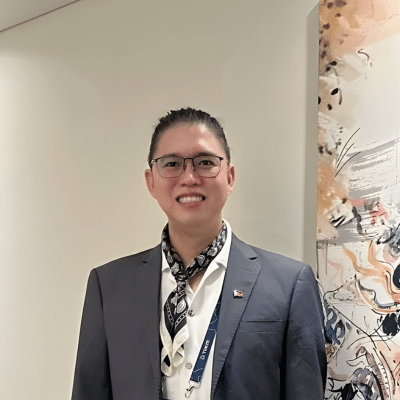 | Mr. Jaypee S. Yongco | Impact Of Feedback on Students’ Performance in Distance Learning: A Case in A Tertiary Education in The Philippines | Mindanao State University – Iligan Institute of Technology, Philippines |
 | Mr. Mantas Danielius Blaževičius | Technological Literacy Without Age Limits: An Empirical Study of AI Training in The Lithuanian Teacher Population | ISM, Lithuania |
| Mr. Niall Mulpeter | Between Product and Process: A Curriculum Lead’s Reflexive Account of Developing and Enacting a Values Based Curriculum in Irish Publicly Managed Schools | University of Limerick, Ireland |
| Mr. Sergey Skopintsev | A Concept-Level Multidimensional Elo Model for Adaptive Educational Systems | Edtech Lab LLC, Russia |
 | Mrs. Adeola Ojeleye | Rethinking Deaf Education: Identify, literacy, And Community in Lagos: A Case Study of Sign-Language-First Pedagogy at Wesley School | Teacher Aid Initiative, Nigeria |
| Mrs. Adewole Cecilia Oyebola | Continuing Education | The Elite Schools, Nigeria |
| Mrs. Holly Carter | Becoming Trauma-Informed Educators: Higher Education’s Role in Addressing the Needs of Care- Experienced Learners | Canterbury Christchurch University, the United Kingdom |
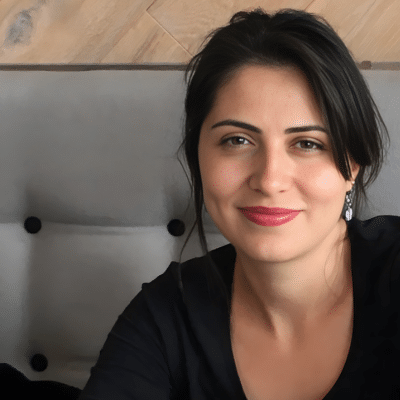 | Mrs. Irem Kök | The Impact of Digitalization on Adult Learning: Exploring the Roles of Readiness, Internal Motivation, Self-Efficacy, And Long-Term Orientation | EGE University, Turkey |
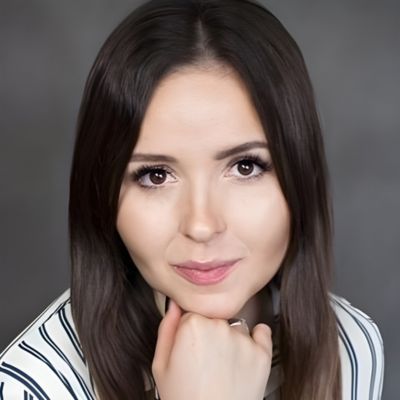 | Mrs. Karolina Radyńska Cenkier | Digital Innovation in Primary Education: Rethinking the Cases of Singapore and Turkey | Independent researcher, Poland |
| Mrs. Maria Barrio Romero | The Correlation Between the Implementation of The Gratuity in The First Cycle of Early Childhood Education and The Increase in Demand for Early Childhood Educators in Castilla Y León. | Independent researcher, Spain |
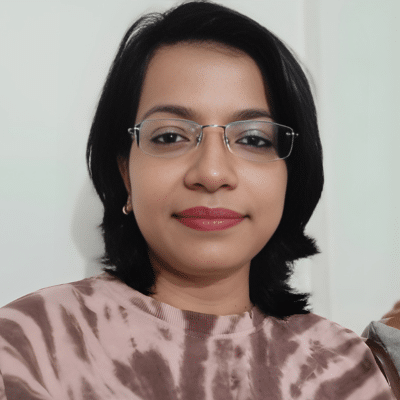 | Mrs. Nidhi Srivastava | Safeguarding The Future: AI-Driven Data Governance and Cybersecurity In K-12 Education Child-Friendly Cybersecurity Education: Exploring Learning Methods, Engagement, And Future Stem Interest | Oakland University, the United States |
| Mrs. Nurana Huseynova | Methodological Foundations for Compiling Etymological Dictionaries | Institute of Linguistics named after Nasimi, Azerbaijan |
| Ms. Lisa A. Vodola | The CLEAR Approach × The Science of Reading: Delivering Inclusive Early Literacy Instruction | Florida Gulf Coast University, the United States |
 | Ms. Maria Alejandra Mareco | When Learning a New Language Silences, The First: Rethinking CLIL Through Translanguaging to Interrupt School-Based Language Loss | Wake County, the United States |
| Ms. Natasha Dorseu | A Neuroscience-Informed Approach to Learning & Curriculum Reform The Perceptual Reframing Loop (PRL): A Case Study | Edgewood University, Canada |
| Ms. Oyshabonu Narzullayeva | Organic Waste Processing as A Business Model for Livestock and Crop Farming in Uzbekistan: Barriers, Drivers, And Implementation Pathways | International House Tashkent Lyceum, Uzbekistan |
| Ms. Senem Seda Demirtaş | Educating The Educators: A Conceptual Framework for Enhancing Teachers’ Digital, Inclusive, And Ethical Competences | English Teacher, Türkiye |
 | Ms. Sriharini Alagendra | Teachers In Wonderland | Toronto Schools, Canada |
 | Ms. Swati Gupta | Scaling Early Mathematics Education: A Low-Cost, Evidence-Based Model for Transforming Math Learning in Government Schools | Pratham Education Foundation, India |
| “Dr. Vincent Ndishunwani Demana” | Enhancing Academic Writing Through Corrective Feedback: An Analysis of Structural Errors Among Level One Students at A South African University | University of Venda, South Africa |
| “Mrs. Shiva Selventiiran Servai Muniandy” | Cracking Online Learning: How Data-Driven Insight Shape Personalized Interventions | Universiti Teknologi Petronas, Malaysia |